
IPv4 Proxy: What It Is and How It Powers Modern Data Collection
IPv4 Proxy: What It Is and How It Powers Modern Data Collection
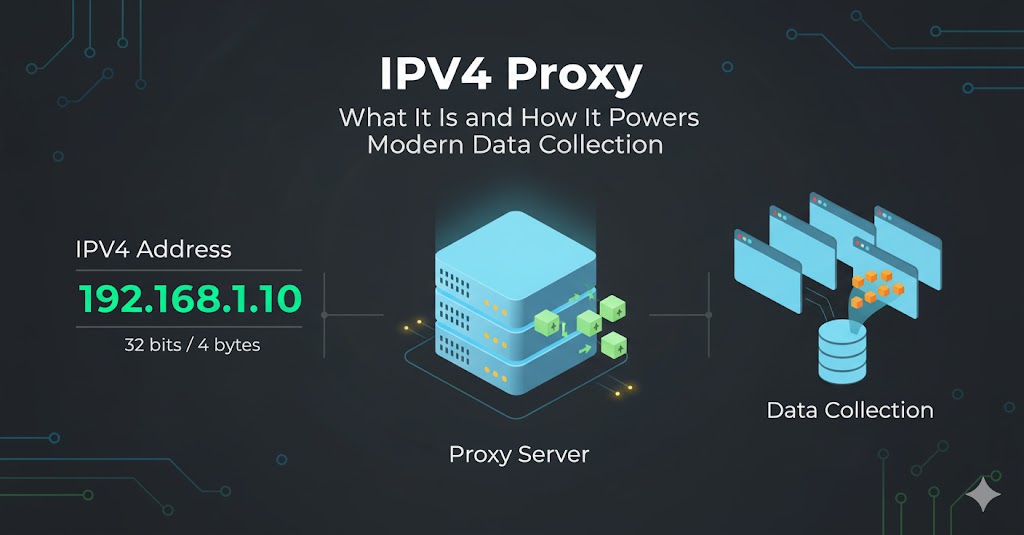
An ipv4 proxy is an intermediary server that routes your internet connection through an IP address using Internet Protocol version 4 (IPv4). This 32-bit address format (e.g., 172.217.14.228) is the backbone of the modern web, making an ipv4 proxy the most compatible and reliable tool for tasks ranging from data collection to online security.
For data engineers, growth teams, and developers, understanding the different types of IPv4 proxies is essential for accessing public data without being blocked or misled. This article explains how they work, how to buy an IPv4 proxy safely, and why a cheap ipv4 proxy can cost you more in the long run.
What is an IPv4 proxy?
An ipv4 proxy is a server that acts as a middleman, using an IPv4 address to send and receive requests on your behalf. This process masks your device's original IP address, making it appear as though your connection is originating from the proxy server's location and IP.
Defining IPv4 and the proxy mechanism
Internet Protocol version 4 (IPv4) is the foundational technology that assigns a unique 32-bit numerical address to every device on a network. Because it was the first major version, the entire "classic" internet was built to support it.
A "proxy" (short for proxy server) is simply a computer that intercepts your request. When you use an ipv4 proxy, you are telling your application or script to send its traffic to the proxy server first, which then forwards it to the final destination.
How an IPv4 proxy routes your traffic
The workflow is simple but powerful, providing a layer of separation between you and the websites you access.
- Request: Your device sends a request (e.g., to open a website) to the ipv4 proxy server's address.
- Forward: The proxy server receives your request and sends it to the target website (e.g., example.com) using its own IPv4 address.
- Response: The website sees the request coming from the proxy, not from you. It sends its response (the website's data) back to the proxy.
- Relay: The proxy server relays that response back to your device.
To the target website, your identity is masked. To your local network, it only sees you talking to the proxy server, not the final website.
Start your project with LycheeIP’s ipv4 proxy pool
Why use an IPv4 proxy instead of an IPv6 proxy?
You should use an ipv4 proxy because it offers universal compatibility with virtually all websites and online services. While Internet Protocol version 6 (IPv6) is newer and offers a vastly larger pool of addresses, its adoption is still far from 100%. Many older, but critical, web servers, corporate firewalls, and legacy systems do not support IPv6 at all.
The universal compatibility advantage of IPv4
If you use an IPv6 proxy to access a website that only runs on an IPv4 server, your connection will fail. You cannot connect to an IPv4-only resource from an IPv6-only address without a complex translation gateway.
Using an ipv4 proxy eliminates this risk. Since every website that supports IPv6 also supports IPv4 (a "dual-stack" configuration), an ipv4 proxy guarantees you can connect to the maximum number of websites. For data collection, where reliability is key, IPv4 is the professional standard.
IPv4 vs. IPv6: A practical comparison
Here is a simple breakdown of the practical differences for a proxy user.
| Feature | IPv4 Proxy | IPv6 Proxy |
| Address Format | 32-bit (e.g., 198.51.100.1) | 128-bit (e.g., 2001:0db8::1) |
| Website Compatibility | Excellent (Near 100%) | Good, but incomplete. Fails on IPv4-only sites. |
| IP Pool Size | ~4.3 billion (Exhausted & Scarce) | ~340 undecillion (Virtually unlimited) |
| Cost | Higher, due to scarcity. | Often lower, due to large supply. |
| Trust / Reputation | Established. IPs have a long history. | Varies. Sometimes seen as less trustworthy. |
| Primary Use Case | Reliable data collection, ad verification. | Niche tasks, large-scale automation. |
Verdict: For data engineers and growth teams, the ipv4 proxy is the reliable workhorse. The risk of failed requests from IPv6 incompatibility outweighs the potential cost savings.
Which types of IPv4 proxies are available?
The main types of IPv4 proxies are datacenter, residential, and mobile, each offering different levels of speed, cost, and anonymity. Choosing the right one is critical for the success of your project.
Datacenter IPv4 Proxies (The high-speed option)
These are the most common and often what people mean by a cheap ipv4 proxy. The IPv4 addresses are not associated with a home ISP but are generated in bulk by a data center.
- Pros: Very fast, highly stable, and inexpensive.
- Cons: Easily detected. Sophisticated websites can see the IP belongs to a data center (not a real user) and may block or CAPTCHA the request.
- Best For: High-volume scraping of low-security websites, speed-critical tasks, and general-purpose browsing.
Residential IPv4 Proxies (The high-trust option)
These proxies use real, ISP-assigned IPv4 addresses from actual homeowners or devices. This is the best ipv4 proxy for sensitive tasks because your requests are indistinguishable from those of a normal, organic user.
- Pros: Extremely high trust and low block rates. Essential for accessing complex websites, e-commerce platforms, and social media.
- Cons: More expensive than datacenter proxies and can have slightly higher latency.
- Best For: Web scraping, ad verification, market research, and managing online accounts. [Link to: Residential vs. Datacenter Proxies]
Mobile IPv4 Proxies (The high-authority option)
These are a special subset of residential proxies that use IPv4 addresses from mobile carriers (like AT&T or Vodafone). They are considered the highest authority and are the most difficult to block.
- Pros: The best ipv4 proxy for trust. Ideal for simulating mobile user actions or accessing mobile-first apps and websites.
- Cons: The most expensive option.
- Best For: Mobile ad verification, app testing, and scraping the most secure platforms.
Start your project with LycheeIP’s ipv4 proxy pool
How do you buy an IPv4 proxy?
You buy an IPv4 proxy by selecting a reputable provider that meets your specific needs for location, IP type, rotation, and protocol. Skipping this research and opting for the cheapest option is a common mistake.
A checklist for choosing the best ipv4 proxy
When you evaluate providers to buy an ipv4 proxy, use this checklist:
- IP Type: Do you need Datacenter, Residential, or Mobile? (See section above).
- Geo-Location: Do you need to target specific countries, states, or cities? This is critical for ad verification and localized data.
- Rotation: Do you need a rotating proxy (a new IP for every request) for scraping, or a static/sticky proxy (the same IP for 10-30 minutes) for managing an account?
- Protocols: Does the provider support the protocols you need, like HTTP(S) and SOCKS5?
- Pool Size & Quality: How large is the provider's IP pool? Are the IPs "clean" (not on a public ipv4 proxy list or blacklist)?
- Support: Is there responsive, technical support for when you run into trouble?
What are the risks of a cheap ipv4 proxy?
A service advertised as a cheap ipv4 proxy is almost always a false economy. These low-cost or free services come with significant risks that can jeopardize your project, data, and security.
- Blacklisted IPs: The IPs are often recycled from a public ipv4 proxy list, meaning they are already banned on most major websites.
- Slow Performance: These proxies are "shared" by thousands of other users, leading to extreme lag and connection failures.
- Data Theft: Many free or cheap ipv4 proxy providers are "honeypots." They log your traffic and steal sensitive data like usernames and passwords.
- Unreliability: The proxies go offline constantly, breaking your scripts and workflows.
When you buy an ipv4 proxy, you are paying for reliability, speed, and trust. A cheap ipv4 proxy offers none of these.
Evaluating provider transparency and IP quality
A trustworthy provider is transparent. Look for clear, simple pricing without complex "unlock" fees. A provider like LycheeIP focuses on developer-first simplicity: you get access to a clean, high-quality residential IP pool with responsive support and clear documentation.
Avoid providers that are vague about their IP pool source or have overly complex dashboards. The best ipv4 proxy service is one that is simple to integrate and just works.
What do ipv4 proxy encryption and protocols mean?
IPv4 proxy encryption refers to securing the connection between your device and the proxy server, while protocols like HTTP and SOCKS5 determine what kind of traffic the proxy can handle.
Understanding HTTP(S) vs. SOCKS5 proxies
- HTTP Proxies: These are designed only for web traffic (viewing websites). They are simple and effective for web scraping.
- HTTPS Proxies: These are HTTP proxies that support the CONNECT method, allowing you to establish an SSL/TLS (HTTPS) connection through them. This is the standard for accessing secure websites.
- SOCKS5 Proxies: This is a more versatile, lower-level protocol. It can handle any type of traffic, not just web pages. This includes email (SMTP), FTP, and gaming (UDP) traffic. SOCKS5 is the preferred choice for maximum flexibility.
How ipv4 proxy encryption secures your connection
It is important to understand what ipv4 proxy encryption does and does not do.
- Connection to Proxy: IPv4 proxy encryption (e.g., connecting to the proxy via an HTTPS or encrypted SOCKS5-style connection) protects your data from being snooped on by your local network (like your ISP or someone on the same public Wi-Fi).
- Connection to Website: This does not encrypt your traffic from the proxy to the final website. Only visiting an HTTPS website can do that.
True end-to-end security is achieved by:
Your Device $\rightarrow$ (Encrypted Connection) $\rightarrow$ Proxy Server $\rightarrow$ (HTTPS Connection) $\rightarrow$ Target Website
Always prioritize using HTTPS on the target website, as this provides the most critical layer of ipv4 proxy encryption and data integrity.
Start your project with LycheeIP’s ipv4 proxy pool
What are the common use cases for an ipv4 proxy?
The most common use cases for an ipv4 proxy involve accessing web data at scale, verifying digital content, and managing online accounts anonymously.
Use Case: Web scraping and data engineering
This is the primary use case for data engineers. By using a large pool of rotating residential ipv4 proxy IPs, a script can make thousands of requests to e-commerce or travel sites to collect pricing, stock levels, and review data without being rate-limited or IP-banned.
Use Case: Ad verification and market research
Growth teams use geo-targeted ipv4 proxy IPs to check how their digital ads are being displayed in different countries or cities. This verifies that ad networks are serving content correctly and helps in analyzing competitor landing pages from a local perspective.
Use Case: Account management and security
A static or "sticky" ipv4 proxy is used to safely manage multiple online accounts. By assigning one unique residential IP to each account, you avoid "linking" them, which can trigger security flags on platforms like Google, Facebook, or eBay.
What is an IPv4 proxy list and should you trust it?
An ipv4 proxy list is a list of publicly available proxy server IPs, and you should generally not trust a free one for any serious work. These lists are the primary source for the lowest-quality, most dangerous cheap ipv4 proxy services.
The problem with a free ipv4 proxy list
When you find a free ipv4 proxy list online, you are looking at IPs that are:
- Abused: They have been used by thousands of others for spam and bot activity.
- Blacklisted: They are already on most major anti-bot blacklists, making them useless.
- Insecure: They are often misconfigured "open" proxies that are logging all your traffic, including passwords.
- Unreliable: Most of the IPs on the list will be offline or unresponsive.
A professional service, when you buy an ipv4 proxy, gives you access to a private ipv4 proxy list or a managed gateway endpoint. Their business model depends on keeping that IP pool clean and reputable.
How to verify proxy quality and avoid blacklists
The only reliable way to get a quality ipv4 proxy is to use a paid provider that actively manages its IP pool. They perform quality checks and remove flagged IPs from rotation. You cannot effectively do this yourself with a static, free ipv4 proxy list.
Is using an ipv4 proxy legal and ethical?
Yes, using an ipv4 proxy is legal in most parts of the world, but its legality depends on how you use it. Proxies are fundamental, legitimate tools for network security, privacy, and data access.
Understanding the legal boundaries
Using an ipv4 proxy is perfectly legal for tasks like:
- Accessing publicly available web data (e.g., product prices).
- Protecting your identity while browsing.
- Bypassing geo-restrictions (though this may violate a site's Terms of Service).
It becomes illegal when used for:
- Hacking, spamming, or launching denial-of-service (DDoS) attacks.
- Accessing data behind a login screen without authorization.
- Scraping copyrighted content for illegal distribution.
Following ethical best practices
For data engineers and growth teams, ethical use is key to long-term success.
- Respect robots.txt: While not a legal mandate, it's an ethical guideline for what a site owner prefers not to be crawled.
- Rate-Limit: Do not "hammer" a server with hundreds of requests per second. Be a good internet citizen and throttle your requests.
- Identify Yourself: Use a clear User-Agent in your scraping script to identify your bot's purpose.
- Access Public Data: Only collect data that is publicly visible and not behind a paywall or login.
Conclusion: Why the IPv4 Proxy Remains Essential
The ipv4 proxy remains the industry standard for a simple reason: it just works. Its universal compatibility ensures that your data collection and ad verification scripts can access virtually any website without technical failure.
While there are many types of IPv4 proxies, the choice between datacenter, residential, and mobile comes down to your target's sensitivity. For any serious project, avoid the false promise of a cheap ipv4 proxy or a public ipv4 proxy list. The best ipv4 proxy strategy is to invest in a reliable provider with a clean, high-speed IP pool.
Comparison/Table (if used):
| Feature | IPv4 Proxy | IPv6 Proxy |
| Address Format | 32-bit (e.g., 198.51.100.1) | 128-bit (e.g., 2001:0db8::1) |
| Website Compatibility | Excellent (Near 100%) | Good, but incomplete. Fails on IPv4-only sites. |
| IP Pool Size | ~4.3 billion (Exhausted & Scarce) | ~340 undecillion (Virtually unlimited) |
| Cost | Higher, due to scarcity. | Often lower, due to large supply. |
| Trust / Reputation | Established. IPs have a long history. | Varies. Sometimes seen as less trustworthy. |
| Primary Use Case | Reliable data collection, ad verification. | Niche tasks, large-scale automation. |
Start your project with LycheeIP’s ipv4 proxy pool
Frequently Asked Questions:
1. What is the best ipv4 proxy for web scraping?
The best ipv4 proxy for web scraping is a rotating residential proxy. These proxies use real ISP addresses, making them highly trusted and difficult for websites to detect or block, which is essential for collecting data from complex targets.
2. Are free ipv4 proxy list sites safe to use?
No, they are generally not safe. IPs from a free ipv4 proxy list are slow, unreliable, and almost certainly blacklisted. Worse, many are "honeypots" set up to monitor your traffic and steal sensitive information like passwords.
3. Is SOCKS5 better than HTTP for an ipv4 proxy?
SOCKS5 is more versatile. While an HTTP proxy only handles web traffic, a SOCKS5 proxy can handle any type of internet traffic (e.g., email, FTP, gaming). For simple web scraping, HTTP(S) is fine, but SOCKS5 is generally the more capable protocol.
4. How do I know if I need to buy an ipv4 proxy?
You need to buy an ipv4 proxy if you are performing tasks at scale, such as web scraping, managing multiple accounts, or verifying geo-targeted ads. A proxy is essential for avoiding IP blocks and rate limits that would stop your project.
5. Does ipv4 proxy encryption make me completely anonymous?
Not completely. IPv4 proxy encryption typically secures the connection between your device and the proxy server, hiding your activity from your local network. However, the proxy provider can still see your traffic, and the final website sees the proxy's IP. True anonymity is complex and requires multiple layers of security.
6. Can I find a good cheap ipv4 proxy?
It's a trade-off. A cheap ipv4 proxy is almost always a datacenter proxy. While "good" for speed and cost, it is not good for accessing secure websites. A "cheap" residential proxy is a red flag, as it likely means the IP pool is of very low quality.

Recommended Articles
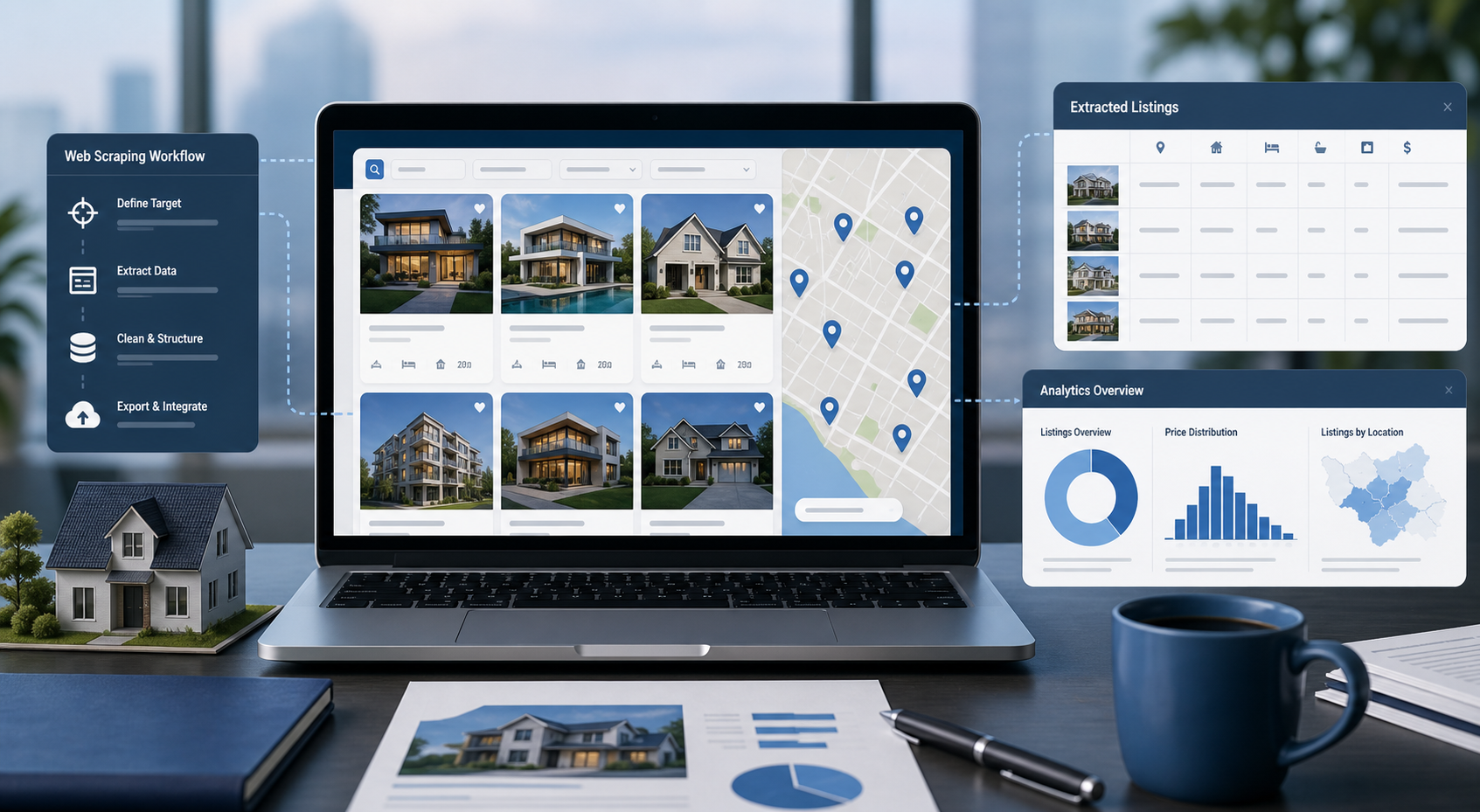
Best Real Estate Scrapers in 2026
Best Real Estate Scrapers in 2026
View Details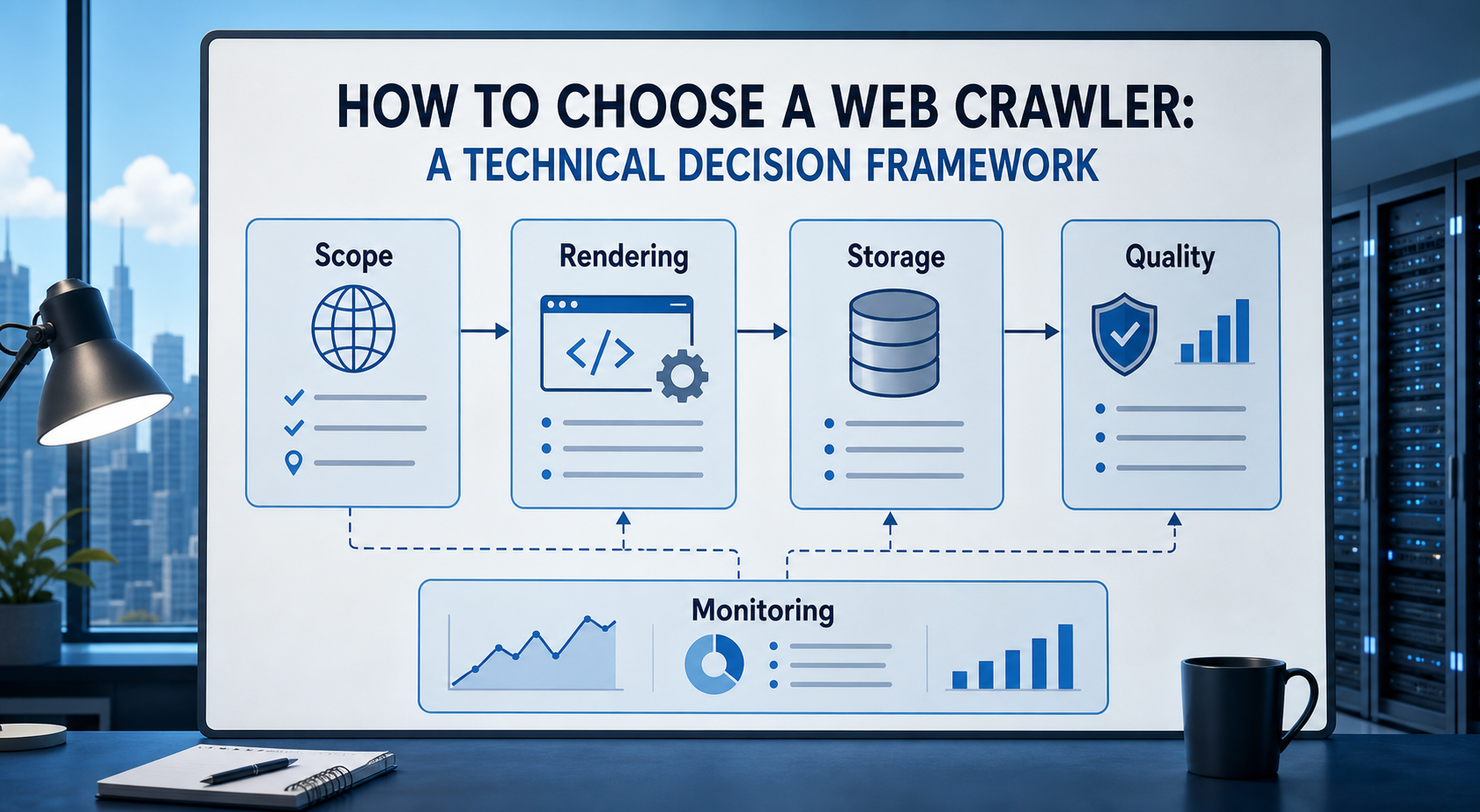
How to Choose a Web Crawler: A Technical Decision Framework
The wrong way to choose a web crawler is to begin with a list of products. The right starting point is the system you need to build. Before comparing tools, define:
View Details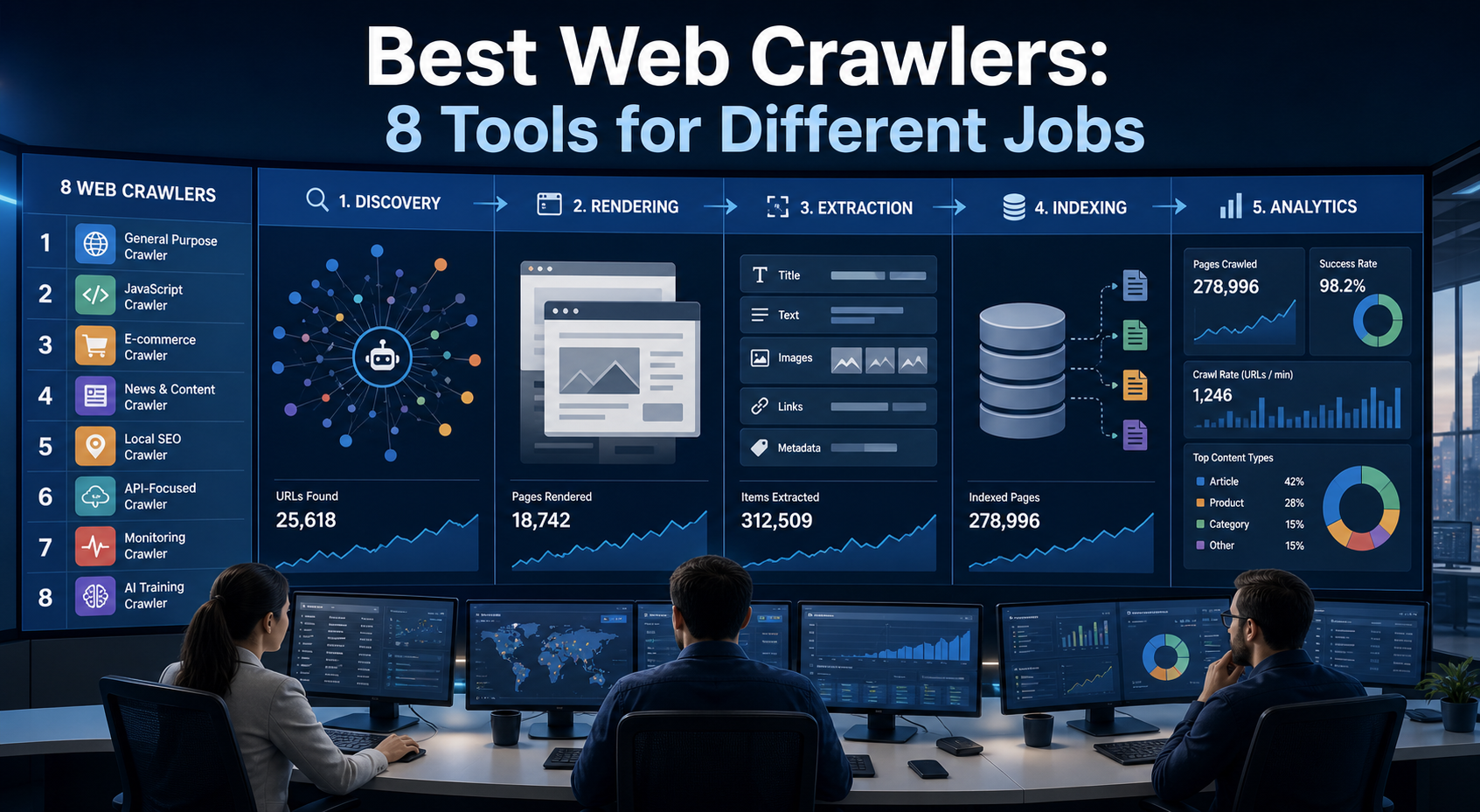
Best Web Crawlers: 8 Tools for Different Jobs
There is no single best web crawler for every project. A technical SEO audit, an AI knowledge pipeline, an internet archive, and a distributed search index may all involve crawling URLs, but they require different capabilities. The most useful way to compare web crawler tools is therefore to ask what job each one was designed to perform. This guide evaluates eight strong options across:
View Details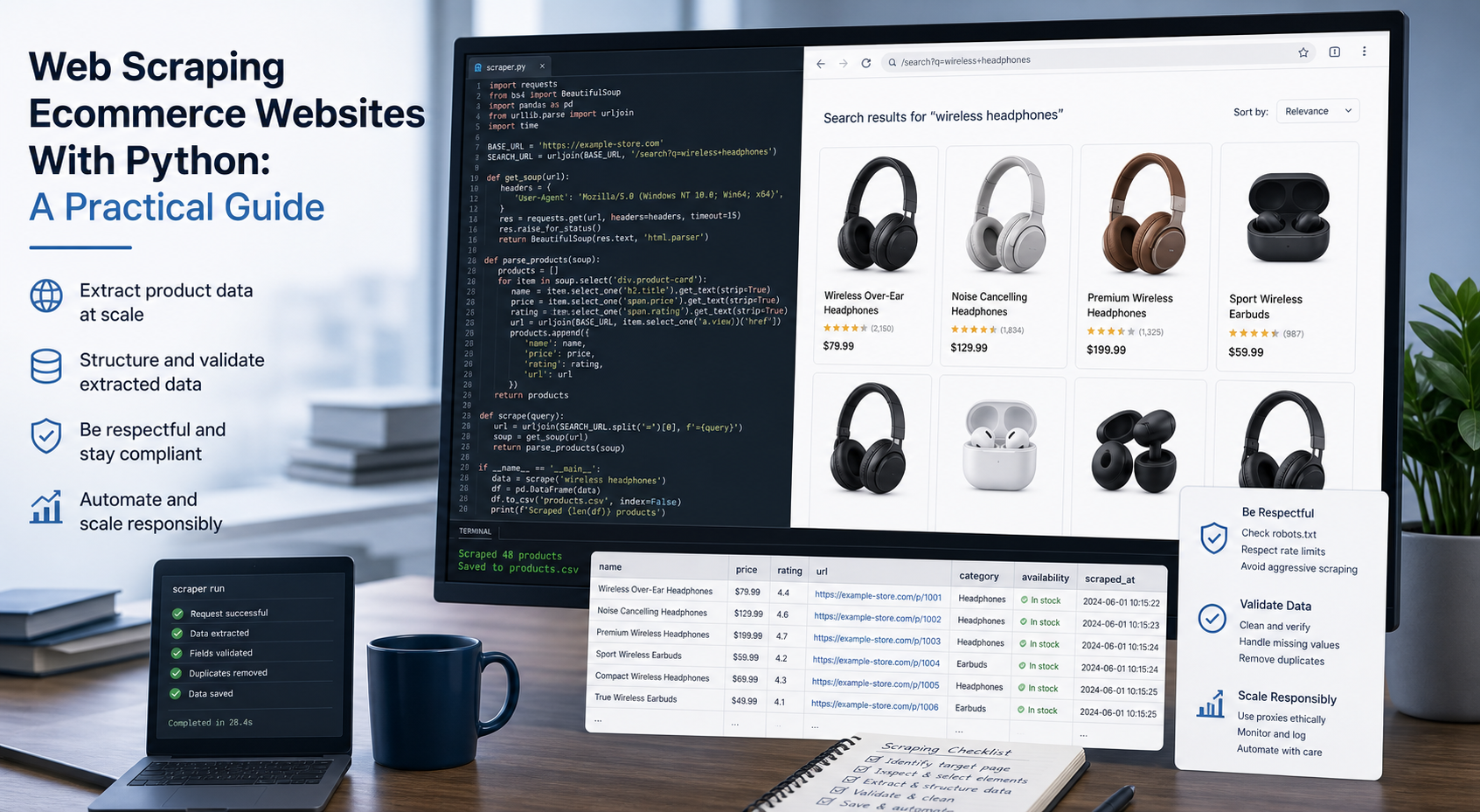
Web Scraping Ecommerce Websites With Python: A Practical Guide
Recommended meta title: Web Scraping Ecommerce Websites With Python: Guide Recommended meta description: Learn how to scrape ecommerce websites with Python using Requests, Beautiful Soup, Playwright, and Scrapy, with validation and scaling guidance. URL slug: /web-scraping-ecommerce-websites-python/
View Details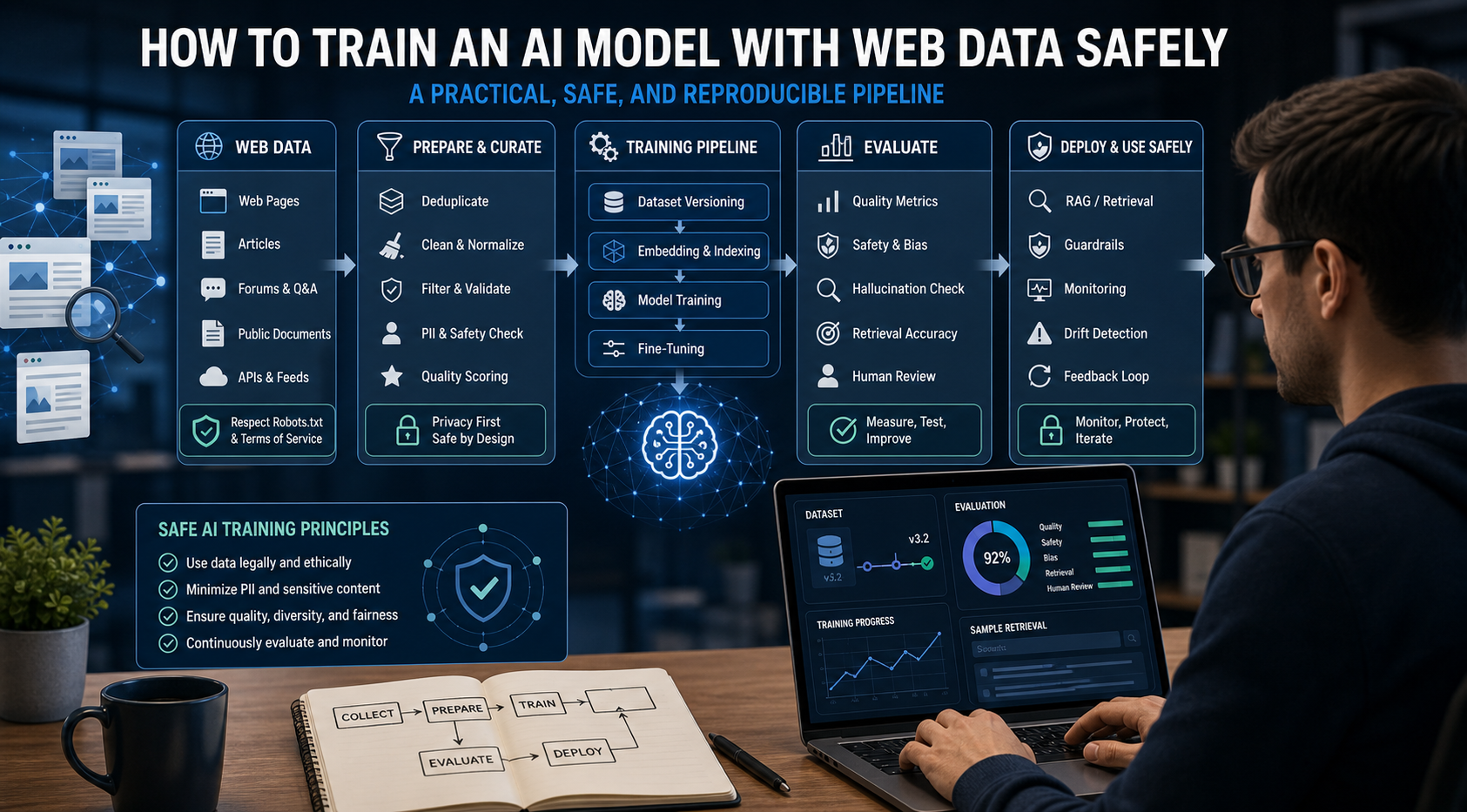
How to Train an AI Model With Web Data Safely
To train an AI model with web data, start by deciding whether you actually need training. Then collect representative sources, preserve provenance, remove duplicates and low-quality content, create leakage-resistant splits, build a baseline, fine-tune or train the appropriate model, and evaluate on real held-out examples before deployment.
View Details